Showing posts with label Fruit. Show all posts

Can You Grow an Apple Tree from Store Bought Apples?

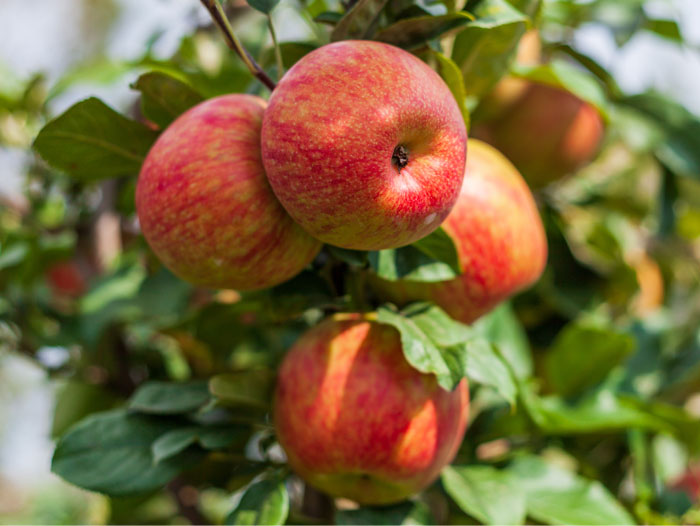
Apples are one of my favorite fruits. I love being able to pick them right from the tree. There is nothing better than a fresh apple picked from your very own apple tree.

Maybe you’ve wondered while eating an apple from the store if you could just plant the seeds and grow an apple tree? The answer is yes, you can grow an apple tree from the seeds of a store bought apple. However, you might not get the apple you were expecting if you do that.

To learn more check out this video on growing apples from seeds. It should answer all your questions.

I hope that was helpful. Growing apple trees are great. Our family loves fresh picked apples, there are so many things you can make with them as well. Hopefully this has gotten you excited and on the road to growing your very own apple tree from seed.

How to Grow Strawberries

The best way to get fresh, healthy, and cheap strawberries is to learn how to plant and grow them at your home. Planting strawberries can really be a good idea because aside from the nutritional benefit of this fruit, strawberries can also be nice decorative pieces in your garden.

If you are planning to grow strawberries at home, then here are some tips that you might want to consider:

  1. Choose the type of strawberry – the thing with strawberries is that you can choose from a wide variety of it. How to Grow StrawberriesStrawberries are very easy to grow, but they do have several requirements that include space, climate, and more. Choosing the type of strawberry should also be determined to the way you want to use it. For instance, if you plan on making preservatives out of it, then you might want to choose the small type of strawberry that bursts with flavor, which is called the Alpine strawberry. To better know the type of strawberry that you want to plant, speak with a local farmer or better yet, do a separate research about the different types of strawberries available.
  2. Re-potting – if you are planning to buy the potted seedlings, you may do so. That way, you are kind of doing the shortcut, which is okay, because you want to make sure that the plant has already grown. However, you should remove the plant at once and plant it or re-pot it, so that the plant will grow healthy, will have vigor, and produce more fruits as well.
  3.  Nurturing – as your strawberry plants grow, make sure that no disease is attacking it, which can prevent it from producing fruits. Check on the leaves for any damages like spots or withering. The leaves, ideally, should be vibrant green. The roots should also be abundant and light. Fungus often attack strawberry plants. If you do not want to have problems with this, you might want to spend a little more on your seedlings, to purchase strawberry plants that are treated to resist fungus and other diseases that can kill the plant.
  4. Growing the strawberries – the nice thing about strawberries is that you can grow them in your yard or even in containers. But make sure to give them proper sunlight, because this is what they want. If in case you live in an area that is cold, you might want to consider planting your strawberries in a container, so you can move them in a warmer area like the indoors.
  5. Harvest time – harvesting strawberries is easy. You can snip it, or just pull the fruit by hand. It is easy to tell when the strawberries are ready for harvesting. If it’s red all over, then this is already a good sign that your strawberries are ready for the pick!

As you can see learning how to grow strawberries at home is rather simple. There isn’t many things better than a fresh picked strawberry that you grew in your own garden.

image courtesy of sigusr0/flickr

How to Grow Raspberries

The beginning of spring is the best time for you to plant and grow raspberries. Growing raspberries is actually a good way to have fresh and abundant stock of it that can be perfect for the holidays, and it is also a nice way to boost your health, since raspberries is packed with so many vitamins that will surely prevent illnesses and diseases that can limit your chance of having a happy life.

If you want to grow raspberries, here are the things that you have to do:How to Grow Raspberries

Choose The Area Where You Want To Plant It

It is always best to prepare the area where you want to plant your raspberries. This is because you want to make sure that your plants will have enough sunlight, water, and will be planted in a well draining soil. You must also protect your raspberries from birds or trolling raccoons. So you might want to cage your raspberries so you can get a good harvest of it.

Choose The Type Of Raspberry That You Want To Plant

In general, there are two common types of raspberries:

  1.  Summer bearing – this is a type of raspberry plant that produces raspberries during the summer only. Once the season is up, it will stop bearing fruits and conserve its energy for the next fruit bearing season, which is next summer again.
  2. Ever bearing – this is a type of raspberry plant that can produce raspberries from spring to fall.

Buy Your Canes

Most garden supply stores or even online retailers have raspberry canes. These are the ones you plant, in order to grow your raspberry plant.

Planting Your Canes

Make sure that your soil is acidic. You can do this by adding compost or mulch. By the way, if you have used the soil for tomatoes previously, this might not be the best area where you want to plant your raspberry. This is because according to experienced farmers, raspberries and tomatoes suffer from the same disease, which can be easily transferred through a contaminated soil.

Plant your canes at least halfway down. Make sure that the soil is firm above, in order to hold the canes in place. You might also want to support your growing canes with trellises so that it will not grow unruly. Prune the branches, and remove the ones that are stagnant. These branches will not produce fruits, and will only use the plant’s energy for nothing.

If this is your first time to grow raspberries, it might be better to go with the purple or black ones. They are easier to grow. The red ones are more challenging to grow.

The nice thing about raspberries is that you can use them in a lot of ways. You can eat them raw, make shakes or juices out of them, or even make sauces that are delicious on top of cakes, ice cream and more! Raspberries can also be canned if you want to preserve it and give it as gifts this coming holiday season.

image courtesy of Ole Husby/flickr

How to Grow Pumpkins

The nice thing about growing pumpkins is that you can use almost every part of it. The flesh of the pumpkin can make mouth-watering soups for the cold weather, and the seeds can make healthy snacks, when you roast them. Growing pumpkins is actually ideal for people who are just starting to learn how to grow a vegetable garden. This is because growing them is very easy and fun. They also grow in most regions in the country, and their seeds are also inexpensive. You can even use the seeds from a pumpkin that you have bought from the grocery.

Here are a few simple steps for growing pumpkins in your own backyard:How to Grow Pumpkins

 Planning Your Planting

Pumpkins do not grow healthy during the cold weather, so this is the best time for you to start planting your seeds. Spring is actually a good time for you to plant your pumpkin seeds so that you will have a good harvest just in time for the Halloween carvings.

 Preparing Your Soil

Since pumpkin plant crawl and they grow in vines, you have to make sure that there is an ample space in your garden for you to plant pumpkins. 20 to 30 yards of open space is good enough for one pumpkin patch. Make sure that this area also has enough sunlight during the day, because pumpkins love the warm temperature. You should also make sure that the soil is well draining. Ideally, pumpkins grow better when your soil is clay based.

 Seeds

There are different types of pumpkins that you can plant at home. If you intend to use the pumpkins for the Halloween carving, then you might want to get seeds of larger pumpkins so that you can make nice decorative jack-o-lanterns for the holiday.

 Planting

Your pumpkin seeds should be planted at least 2 inch deep in the soil. You should also make sure to give space in between seeds, so that their roots under the soil will have an ample space to grow. After planting the seeds, cover the soil with compost to give your soil enough nutrients, to ensure healthy and abundant pumpkins during the harvest.

 Nurturing & Nourishing

Make sure that you water your pumpkins are watered regularly to keep the ground moist. Try to avoid the pumpkin leaves when watering, because the moist can often attract fungus, which can hurt your plant. This being said, it is best to water pumpkins early in the morning, so that it will have enough time during the day to dry out. Remember, fungus love moist and dark places. So fungus are likely to attack during the night time.

 Harvest Time

It is easy to tell when the pumpkins are ready for harvesting. If you see them in full size already, and that they have turned into orange already, then this is already a clear sign that your pumpkins are ready for picking and carving to make nice jack-o-lanterns.

image courtesy of ginnerobot/flickr

How to Grow Grapes in Your Backyard

The process of growing grapes requires time and lots of patience. So if you are really determined to grow your own grapes at home, then you might want to put your focus and full attention into it, so that you will be able to reap a good harvest for you and your family to enjoy.

Ideally, grapes can be grown starting from a graft or cut-outs from existing grape vines. However, this might not be possible atHow to Grow Grapes times, because you might not have a good source of it. Grape seeds are always available; it is harder to grow, but the being able to grow them will surely give you a lot of reasons to be proud of yourself.

So here are the steps to grow grapes:

Choosing Your Grapes

In case you do not know, there are thousands of different varieties of grapes. Some are good for eating, some are great for making jam, while some are just good for decorative pieces in your garden. That being said, you should choose the type of grape variety that will meet your demands after harvest. Climate is also another factor that you have to consider if you want to grow grapes. Choose the type of grapes that will grow on the kind of climate that you have.

Once you were able to determine the type of grapes that you want, buy them from garden supply stores or online retailers of seeds.

Preparing The Seeds

Once you are able to get the seeds, make sure that the seeds you will be planting are of the best and healthiest. Discard the ones that are not. Place them in water. Everything that sinks under are healthy. The one the floats, are not. Remove them.

Soak the seeds for at least 24 hours in distilled water. After soaking, prepare a medium where they can start to germinate. Moistened paper towels will do. Since grapes love the cold climate, you might want to keep them inside the refrigerator during the initial germination process.

After refrigerating, you will now have to plant the seeds. One for each small pot. While in the pot, you have to maintain at least 70 degrees F. If you are not quite sure about managing temperature manually, you can use greenhouse warming mats.

Watering grapes should include misting or spraying only. Never pour water, or your grape seeds will not grow. Grape sprouts should start to show in about 2 to 8 weeks after planting them in pots.

When your sprouts have reached at least 3 inches, it is now time to transfer them in the ground, to allow them to grow further. Make sure that your grapes will have something to cling on, since their vines will start crawling. You can make trellises around each plant. By the way, when planting your grapes outside, you have to make sure that your soil is well draining.

Harvest time is easy to tell. This is when your grapes are already fully grown in size, and the color has already changed.

Image courtesy of Otto Phokus/flickr

Tips for Washing Produce

Fruits and vegetables are an important part of a healthy diet. So, how do we go about keeping our fresh produce safe to eat?

Here are some simple tips for washing produce:Tips for Washing Produce

  • Use a clean pair of scissors or knife to open your bags of produce
  • Fruit and vegetable peels may carry bacteria that can spread during peeling, cutting, or eating. Wash all your fresh fruits and vegetables with cold tap water immediately before eating. This applies to all fruits and vegetables like bananas and oranges; even your pre-washed fruits and vegetables.
  • Scrub your firm fruits and vegetables with a produce brush or produce rag to clean them.
  • Remove and discard the outer leaves on lettuce.
  • After washing place your produce into a clean container, not back into the original bag.

These are just a few tips for washing produce that will keep all your fruits and veggies safe to eat.

image courtesy of muammerokumus/flickr

How to Grow Blueberries

Blueberries are one of the best sources of vitamins and essential nutrients that your body needs, in order to keep our health in tiptop condition. It is also high in anti-oxidants, that makes us look younger for a long time, and prevents illnesses and diseases too. I can go ahead and enumerate the number of benefits of blueberries to the body, but just to cut it short, blueberries are good for the body, so eating it will always be best for you.

If you are planning on including blueberries into your diet, then you might want to know the ways on how to grow blueberries, How to Grow Blueberriesso that you will always be sure of having fresh blueberries any time you need it.

Here are the steps on how to grow blueberries:

 Choosing Your Blueberries

Just like other fruits, blueberries come in different varieties. You have to choose the right variety that will suit your climate and the way you want to use it after harvest. For instance, there are blueberries that are best for eating raw and fresh because they are big and juicy. While some are best for toppings like blueberries on pancakes, waffles, or even on ice cream. These are the smaller ones.

 Preparing To Plant

The preparations that you have to do initially will always depend on the type of blueberry that you want to plant. There are some types of blueberries that require a large space, for them to grow healthy, so it can produce a bountiful harvest. You might also want to make sure that the area where you want to plant your blueberry has enough sunlight. The soil should also be well draining, which means it can absorb water, but it should not let the water sit for a long time.

Also, blueberries are very particular when it comes to the PH of your soil. They prefer it to be more on the acidic side, so you might want to make sure that your soil has a PH of at least 4.09. If you go beyond 5 PH, this will not do good for your blueberry plants.

 Promote Pollination

The flowers of a blueberry plant have male and female organs. However, you cannot be certain which among them can pollinate. To make sure that your blueberry plants will be able to pollinate, you must plant several varieties of it (still following the required space in between plants), so that the bees will be able to travel from one plant to another, and encourage pollination.

 Pruning

When you are starting to grow bushes already, make sure to prune some branches. Doing this will eliminate branches that are stagnant, and allow the nutrients to go to the other healthy branches that will produce fruits.

 Harvesting Blueberries

Harvesting blueberries can take some time. The actual waiting time will depend on so many factors including the type of blueberry that you planted, the climate, and of course the way you take care of your blueberry plants.

image courtesy of cagrimmett/flickr

How to Grow Blackberries Indoors

Fruit bearing trees are ideally planted outdoors in order to achieve success and better harvest. But this does not mean that you cannot plant them indoors, or in places where there is limited exposure to sun and outside weather.

With this, can you grow blackberries indoors? The answer is a big – YES! Blackberries are great source of vitamins, minerals, How to Grow Blackberries Indoorsand antioxidants. They make healthy snacks, juices, and shakes too!

So if you have limited garden space, or if you live in an apartment, this should not deter you from growing blackberries indoors. You can, if you will try hard.

Follow the steps below in order to achieve good results from your blackberry indoor planting project:

Blackberries do come in different variants. But if you are growing them indoors where there is very limited space, you might want to get the erect dwarf type of blackberries. This type of blackberry have very strong roots and stiff trunk. This will hold up any pressure and condition in an indoor environment.

Any container will do when planting blackberries indoors. You can use the ones made of clay, metal, or even plastic. Just keep in mind that you are likely to move your tree once in a while indoors maybe to give it some fresh air or sunshine outside. Thinking of the weight of your tree, soil, and container, you have to make sure to add caster stand at the bottom of your container, so that you will be able to move it with ease.

Before putting soil into your container, make sure that the container has holes. That will help drain the water well. You might also want to place wire mesh in every hole that your container has, so that it will not spill the soil. You can also place pieces of broken bricks underneath so that it can control the water from being drained too much.

Once you are done preparing your container, you should now prepare your soil. You need soil that is specifically formulated trees bearing fruits. You should be able to find them in garden supply stores and greenhouses. But just in case you cannot find one around, you can also make it by mixing vermiculate, sand, and peat. All one part each.

Now that you have your container and soil ready, you can now transfer your blackberry seedlings. But before transferring, check the canes around to see if there are unwanted and unhealthy looking roots. Remove them, and plant your blackberry plant at least 5 inches deep.

While your tree is growing, you might also want to nourish your tree with some compost, bone meal, or mulch. These will help your tree get more nutrients to make sure it grows appropriately and as expected.

Harvest time happens on the second year (blackberries need 1 year to mature). It might take a while before you can taste the first harvest. But the long wait is definitely worth it, once you have seen your tree bearing fruits successfully.

image courtesy of stanzebla/flickr